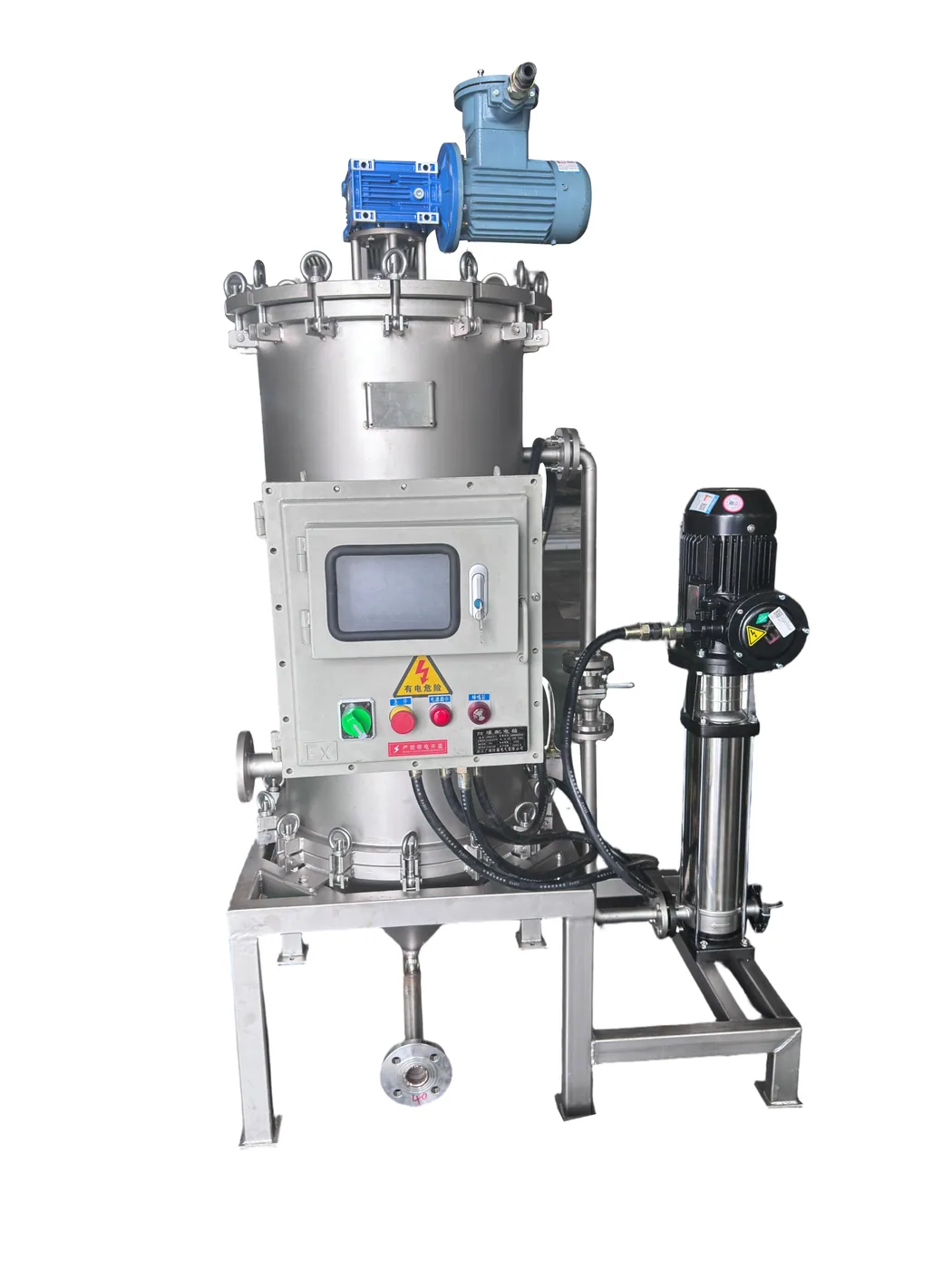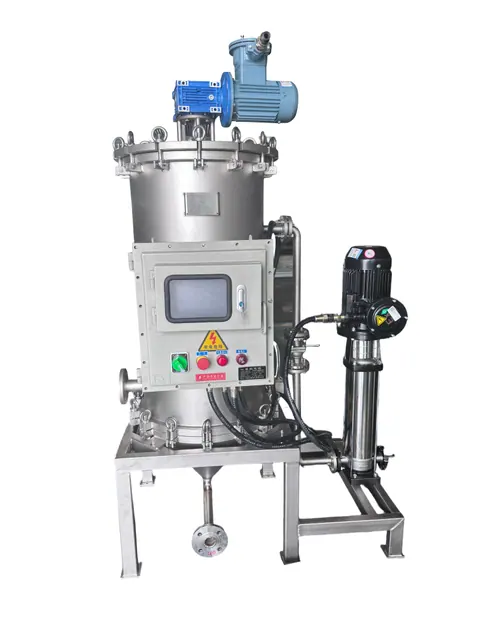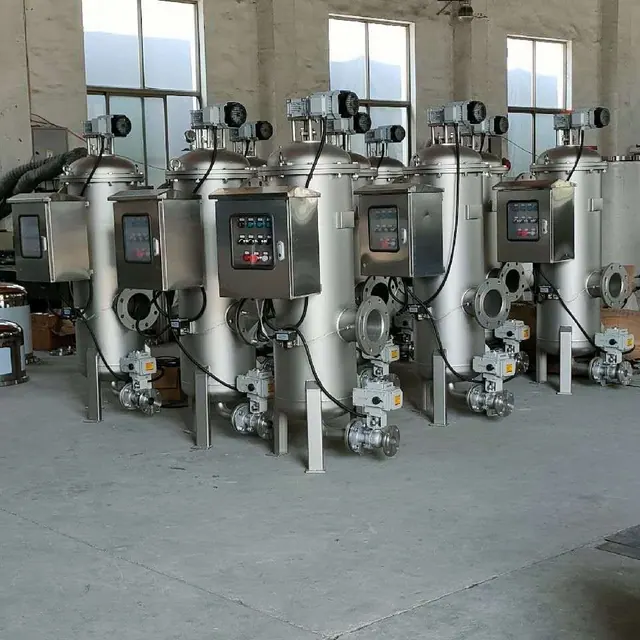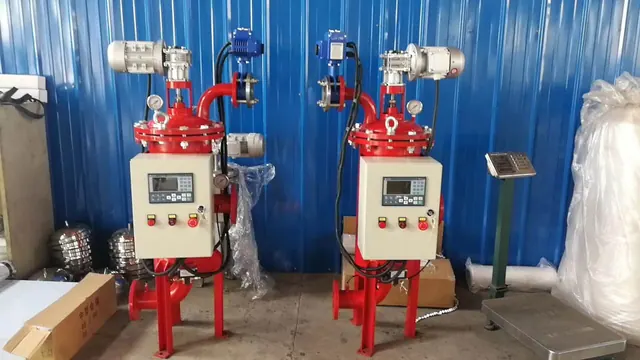
Automatic & Self-Cleaning Filters
Engineered systems for continuous or reduced-interruption filtration, automatic switching and controlled cleaning.

Choose the operating concept before the model.
Automatic does not mean one universal mechanism. Switching, scraper, back-flush and modular systems suit different contaminant behaviour, utilities and continuity requirements.
Choose the cleaning mechanism from contaminant behaviour and continuity risk.
“Automatic” is not a single technology. The correct route depends on whether particles release under back-flush, require mechanical scraping, or must be isolated by chamber switching.
Define continuity
Quantify allowable interruption, standby requirement and the production cost of stopping filtration.
Characterize contamination
Record particle size, concentration, hardness, stickiness, viscosity and whether solids settle or form a surface layer.
Choose cleaning physics
Compare chamber switching, sequential back-flushing and scraper cleaning against the actual deposit mechanism.
Specify controls
Confirm pressure/time logic, sensors, valves, discharge handling, power, communication and fail-safe position.
Preliminary route matrix
| Operating condition | Recommended starting route | Why it fits |
|---|---|---|
| Continuous flow with chamber isolation | Duplex self-cleaning filter | Two chambers support controlled switching while duty continues. |
| High or variable flow requiring scalable parallel area | Modular self-cleaning system | 3–24 modules can be configured for sequential cleaning. |
| Viscous fluid or adherent surface deposit | Scraper self-cleaning filter | Mechanical removal is considered where back-flush alone may be insufficient. |
| Shutdown and manual media change are acceptable | Bag filter route | Lower system complexity may be more economical. |
Automatic systems need process and control data.
Cleaning performance cannot be confirmed from flow and micron rating alone.
- Medium, viscosity and temperature
- Normal / peak flow and pressure
- Particle size, concentration and behaviour
- Required micron and allowable pressure drop
- Cleaning water/air and solids discharge route
- Power, PLC signal and redundancy requirement
Screen geometry and cleaning method are interdependent.
For cleanable metal elements, slot/opening, support structure and retained particle shape must be reviewed with the equipment cycle.
The 20–500 μm and 3–24 module figures describe the confirmed modular family. Final cleaning cycle, capacity and control sequence are project-specific.
Choose a technical starting point
Use the routes below to review a verified technical page or send the selected configuration directly to engineering. Final sizing follows the actual process conditions.
Duplex Self-Cleaning Filter
Controlled switching between two filtration chambers.
View technical page →3–24 modulesModular Self-Cleaning Filter System
Sequential back-flushing while remaining modules continue filtering.
View technical page →Selection routeScraper Self-Cleaning Filter
Configuration confirmed from medium and contaminant behaviour.
View technical page →Need help selecting within the automatic & self-cleaning filters family?
Send the process conditions and we will route the request to the appropriate product configuration.